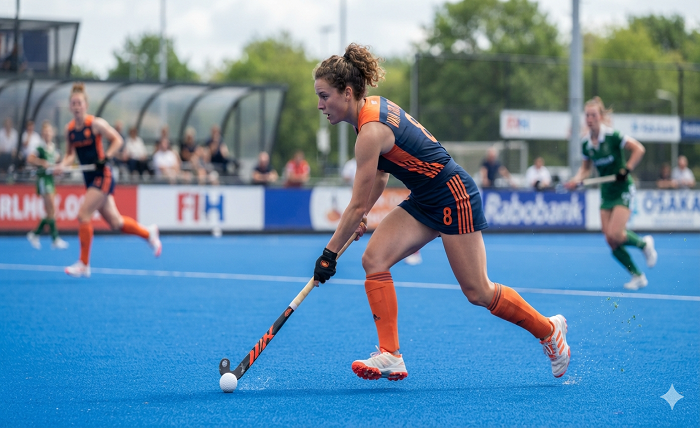
Modern field hockey moves at a pace that would have been difficult to sustain in earlier eras. The ball travels faster, players cover more ground, substitutions occur more often, and teams transition from defense to attack within seconds. These changes have increased tempo, but they have also reduced the amount of time available for extended individual actions.
Fans may encounter smartsoft jetx while moving between sports coverage and other forms of online entertainment, but the transformation of field hockey is mainly tactical and physical. Players still need strong technical skills, yet modern systems reward those who can use them within a collective structure. The game has become less about one player carrying the ball through several opponents and more about moving the ball before pressure arrives.
Synthetic Surfaces Increased Ball Speed
One of the main reasons field hockey became faster was the shift toward synthetic surfaces.
On natural grass, the ball could slow, bounce unevenly, or become trapped by the surface. Players often needed more touches to bring it under control. Individual dribbling had greater value because passing over distance was less predictable.
Synthetic pitches changed that relationship.
The ball now travels with more speed and consistency. Players can pass across larger distances without losing as much control, which makes rapid circulation more effective.
This reduces the incentive to hold possession for too long. A player who carries the ball through midfield may allow the defense to recover. A quick pass can achieve the same territorial gain with less risk.
Pressing Leaves Less Time for Individual Actions
Modern teams press with more coordination.
When one player receives the ball, opponents often close space from several directions. The defender nearest the ball applies pressure while teammates block passing lanes and prepare to intercept the next action.
This creates less time for extended dribbling.
A player who attempts to beat several defenders may lose possession before the move develops. Even if the first opponent is beaten, a second defender is usually positioned nearby.
The result is a stronger emphasis on one-touch and two-touch play. Players are expected to scan before receiving and decide where the ball should go before contact.
Technical ability remains important, but it is used to escape pressure quickly rather than to dominate possession for long periods.
Passing Has Become the Fastest Way to Create Space
A player can move faster without the ball than while controlling it. The ball can also travel faster through a pass than through a dribble.
Modern hockey systems exploit this principle.
Teams use short combinations, switches of play, and diagonal passes to move defenders. The objective is to create space by forcing the opposition to shift repeatedly.
An individual dribble changes the position of one player. A sequence of fast passes can change the position of an entire defensive unit.
This makes collective circulation more efficient.
Players are still encouraged to carry the ball when space opens, but the action usually has a tactical purpose. The player may draw a defender before releasing a pass rather than trying to complete the attack alone.
Rolling Substitutions Support Higher Intensity
Frequent substitutions have also changed the pace of the sport.
Players can perform at a higher intensity when they know they may leave the field for recovery and return later. Midfielders and forwards can press, sprint, and chase transitions without conserving as much energy for the entire match.
This creates constant pressure on the player in possession.
Fresh defenders enter with enough energy to close space quickly, while fresh attackers can accelerate into gaps as soon as possession changes.
The effect is cumulative. Faster players create faster decisions, and faster decisions make prolonged individual play harder.
Substitution strategy therefore influences tactical style as much as fitness.
Defensive Systems Have Become More Structured
Earlier forms of the game often gave skilled attackers more opportunities to isolate defenders.
Modern defensive structures are designed to prevent those situations.
Teams defend in lines, protect central channels, and maintain support around the player who challenges the ball. If one defender is beaten, another is usually positioned behind.
This means attackers rarely face only one opponent.
To progress, teams often need to move the defense first. Passing from one side to another can create a gap that individual dribbling would struggle to find.
Defensive organization has therefore encouraged attacking organization.
The better teams become at controlling space without the ball, the more attackers must rely on coordinated movement with it.
Fitness Has Changed What Teams Can Demand
Modern players are expected to repeat high-speed actions throughout the match.
They sprint forward, recover into defensive positions, press, and then accelerate again when the ball is regained.
Higher fitness standards allow coaches to build systems around constant movement.
This changes the role of the ball carrier. A player cannot assume teammates will remain static while waiting for an individual move to finish. They are already moving into new positions and expecting the ball to continue through the structure.
Passing becomes part of the running system.
The player with the ball is one element in a sequence rather than the sole creator of the attack.
Individual Skill Has Changed Rather Than Disappeared
Modern hockey is less individual, but that does not mean individual skill is less important.
The required skills have changed.
Instead of carrying the ball for long distances, players may use a first touch to escape pressure, a short drag to change the passing angle, or a quick elimination move to create one second of space.
The individual action is shorter but often more precise.
A player may beat one defender rather than three because beating the first defender is enough to create an overload.
The value of skill is therefore measured by what it allows the team to do next.
Decision Speed Has Become a Core Skill
One of the main qualities of modern players is the ability to decide quickly.
Before receiving the ball, a player must know where pressure is coming from, where teammates are moving, and which passing lanes are open.
This requires scanning.
A technically gifted player who waits until receiving before making a decision may appear slow even if stick control is strong. A player with simpler technique may be more effective because the next action has already been selected.
The game has therefore shifted some emphasis from execution alone toward perception.
Fast hockey is not simply produced by faster running. It is produced by faster information processing.
Counterattacks Depend on Collective Movement
Transitions are among the fastest phases of modern field hockey.
When possession changes, teams have only a short period before the opponent rebuilds its defensive shape.
One player carrying the ball alone may slow the attack. Instead, several players sprint into different lanes while the ball is passed forward.
This creates multiple threats.
Defenders must decide whether to pressure the ball or protect runners. That hesitation can open space for another pass.
The transition works because several players coordinate their movement. Individual speed matters, but the attack becomes more dangerous when that speed is connected.
Set Plays Reinforce Collective Execution
Penalty corners and free-hit routines also show how modern hockey has become more system-based.
These situations depend on precise timing between several players. The injector, stopper, shooter, decoy runners, and rebound players all have assigned roles.
One strong shot may finish the move, but the opportunity exists because the sequence was coordinated.
The same principle appears in open play. Teams rehearse patterns that bring the ball into scoring areas through several connected actions.
Individual improvisation still matters when the pattern breaks down, but structured execution usually creates the first advantage.
Faster Hockey Rewards Players Who Release the Ball
The central change in modern field hockey is the relationship between time and possession.
Players have less time before pressure arrives, but they also have better surfaces, stronger fitness, and more tactical support from teammates. This makes quick release more valuable than prolonged control.
The sport has not become less skillful. It has changed where skill is expressed.
Modern players must receive cleanly, scan early, make fast decisions, and use short individual actions to improve the next team action. A dribble still matters, but it is usually a tool for creating a passing lane rather than an end in itself.
Field hockey has become faster because the ball moves sooner, players move more, and defensive pressure arrives earlier. It has become less individual because no player can control that speed alone. The modern game rewards coordination, and the best individual players are often those who understand exactly when to stop being individual.